|
Dhruva Abhijit Rajwade
I am a PhD student in Prof. Marianna Rapsomaniki's AI/ML
For Biomedicine
group
at CHUV, Lausanne, working on drug perturbations,
causality and generative modelling for biology. I
graduated in May '25 with an Integrated Master's in
Biotechnology and Biochemical Engineering from
IIT Kharagpur.
Before that I worked with Prof.
Koel Chaudhury
and Prof.
Soumya De
at IIT Kharagpur, with Prof.
Brian Ingalls
at the University of Waterloo (2023), and with Dr.
Shengchao Liu
at Caltech (2024) on Protein-DNA interactions. My
Master's thesis extended that work to discrete diffusion
for de novo DNA-binding protein design; some designs
expressed well in the lab, and the project continues in
Prof. Riddhiman Dhar's
group
at IIT Kharagpur.
I am a recipient of the
Caltech SURF
fellowship (2024) and the
MITACS Globalink
Research Internship (2023), and was selected for the
EPFL E3 scholarship
(2024) and the
ThinkSwiss
Research scholarship (2023).
Email
/
Scholar
/
Twitter
/
Github
|

|
Research
Currently: problems where biology has a
spatial structure — spatial omics over tissue
slides, with a dash of organoids — and generative
models that predict how cells respond to perturbation.
Both come down to the same question for me: can a model
reason its way to an answer, refining it over the
structure of a tissue or the context of a treatment,
rather than reading it off in a single shot?
More broadly, I am interested in generative modelling
and reasoning for biological problems, spatial omics,
learning from patient data, and perturbation prediction,
alongside gene regulation, biological systems, and the
mathematical modelling of biological networks and
dynamics. Most of my work has involved applying robust
learning methods to biological problems in an
interpretable manner. Apart from Biology, I am keenly
interested in and have also worked in Deep Learning for
Vision (specifically SSL and Generative modelling), as
well as Causal Inference and Graph Learning.
|
|
[Oct 2026]
|
New
slides on predicting
spatial gene expression from H&E with recursive and
flow reasoning models, with interactive gene explorers.
|
|
[Aug 2026]
|
I gave a
talk on Tiny
Recursive Models for spatial omics at the
Multiomics Reading Group.
|
|
[Jul 2026]
|
Our
work
on Tiny Recursive Models for spatial omics was accepted at
the
ICML 2026 Foundations of Deep Generative Models
workshop in Seoul.
|
|
[Jun 2026]
|
Our
paper
on the Conditional Monge Gap for generalizable single-cell
perturbation modelling is out in
Nature Machine Intelligence.
|
|
[May 2025]
|
Some early work from my Master's thesis was accepted as a
poster at the
AI Bio X
conference at Sanger, Cambridgeshire. See you in the UK!
|
|
[Dec 2024]
|
Our
paper on
backdoor and adversarial attacks targetting SSL was
accepted at ICASSP 2025. See you at
Hyderabad!
|
|
[Nov 2024]
|
Our
work
on understanding Protein-DNA interactions using Protein
and Genomics Foundation models was accepted at the
MLSB, FM4Science and
AIDrugX workshops, NeurIPS 2024.
|
[Note: Highlighted papers indicate first authorship; (*)
indicates equal contribution].
|
Reasoning Across Space: Tiny Recursive Models for
Spatial Omics
Dhruva Abhijit Rajwade,
Marianna Rapsomaniki
ICML 2026 Foundations of Deep Generative Models
workshop, 2026
Paper
/
Talk
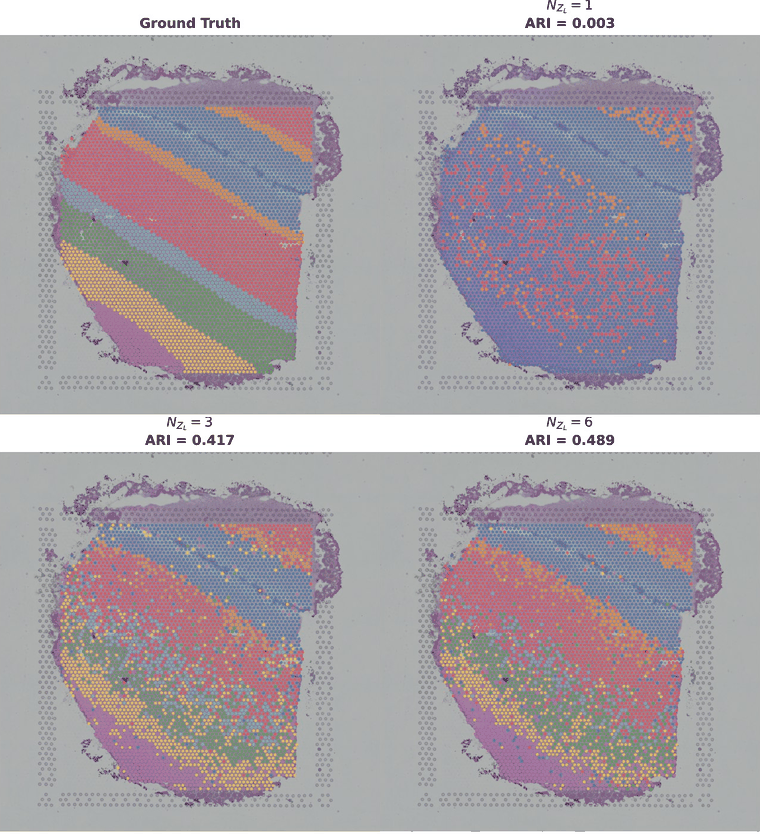
A 7M-parameter Tiny Recursive Model that refines its own
answer over a tissue slide, instead of scaling depth or
parameters. Recursion over space lets the same small
block improve spatial domain assignments step by step,
beating parameter-matched non-recursive baselines on all
12 held-out slices zero-shot, and giving the best
supervised histology-to-expression results in our
setting. Animation shows predicted cortical layers
sharpening as the number of latent recursion steps
grows.
|
|
Conditional Monge Gap enables generalizable
single-cell perturbation modelling
Alice Driessen, Dhruva Abhijit Rajwade,
Benedek Harsanyi,
Marianna Rapsomaniki, Jannis Born
Nature Machine Intelligence (Journal), 2026
Paper
/
arXiv
/
Code
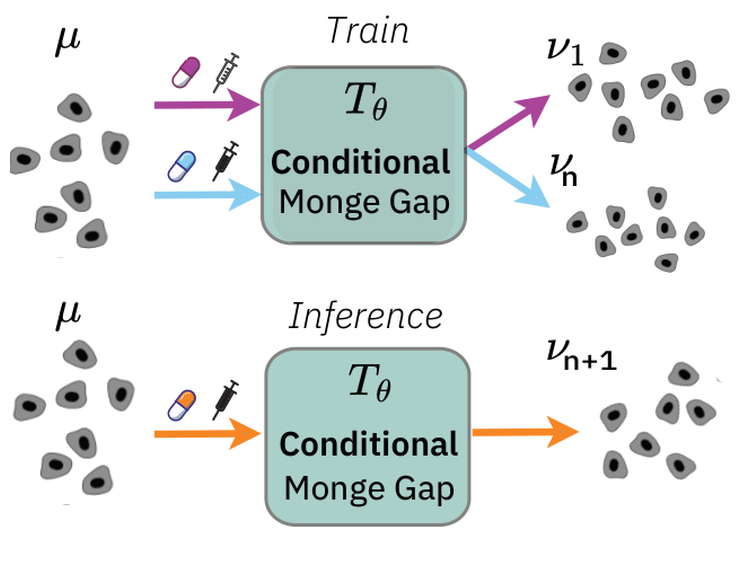
Neural optimal transport handles the unpaired data that
single-cell perturbation screens produce, but most OT
maps cannot condition on the treatment context. We
propose the Conditional Monge Gap, which learns OT maps
conditioned on arbitrary covariates (drug, dosage, cell
type, or combinations). Aggregating across conditions
turns this into cross-task learning, unlocking strong
generalization to unseen drugs and dosages and capturing
the heterogeneity of the perturbed population far better
than other conditional models.
|
|
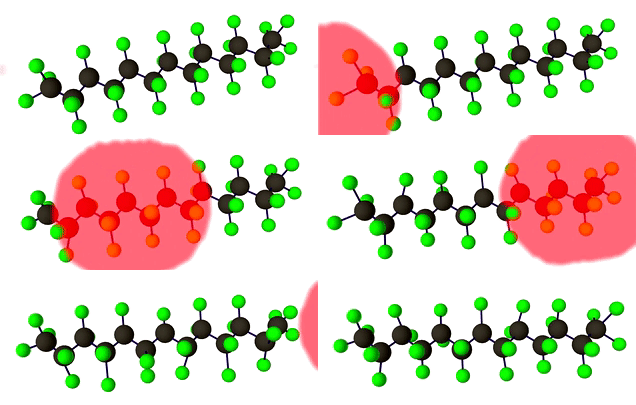
Understanding Protein-DNA Interactions by Paying
Attention to Protein and Genomics Foundation
Models
Dhruva Abhijit Rajwade, Erica Wang, Aryan
Satpathy, Alex Brace, Hongyu Guo, Arvind Ramanathan,
Shengchao Liu, Anima Anandkumar
NeurIPS 2024 Foundation Models For Science, AI for New
Drug Modalities, Machine Learning in Structural Biology
workshops, 2024
Paper
/
Code
Cross-Attention coupled with Protein and Genomics
Foundation models to understand Protein-DNA interactions
speeds up inference and achieves State-of-the-art
performance in predicting contacts in Protein-DNA
complexes (using purely sequence data for inference).
|
|
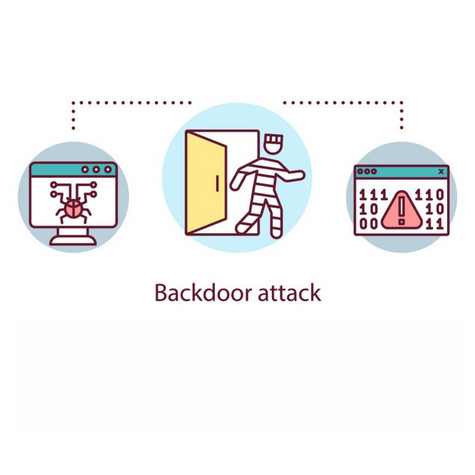
Towards Backdoor Mitigation and Adversarial
Robustness in SSL
Dhruva Abhijit Rajwade*,
Aryan Satpathy*, Nilaksh*
ICASSP 2025
Paper
/
Code
An intuitively elegant and simple defense strategy to
defend against standard SSL augmentation invariant
frequency based backdoor attacks. Taking a leaf out of
frequency domain attacks, we also use frequency domain
patching to increase model robustness in SSL.
|
|
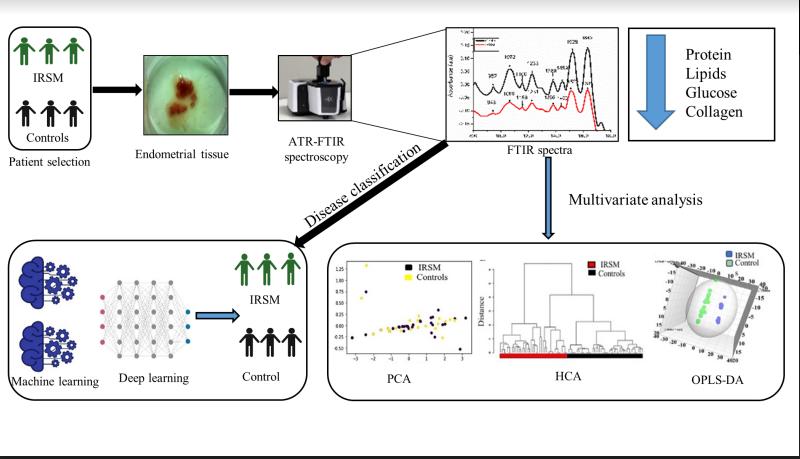
Attenuated Total Reflectance–Fourier Transform
Infrared (ATR-FTIR) Spectroscopy Combined With Deep
Learning for Classification of Idiopathic Recurrent
Spontaneous Miscarriage (IRSM)
Dadoma Sherpa, Dhruva Abhijit Rajwade,
Imon Mitra, Souvik Biswas, Sunita Sharma, Pratip
Chakraborty, Shovandeb Kalapahar, Ratna Chattopadhyay,
Koel Chaudhury
Analytical Letters (Journal), 2024
Paper
/
Code
An extension of our previous work (see below) on using
(ATR-FTIR)Spectroscopy and Deep Learning for prediction
of Idiopathic Recurrent Spontaneous Miscarriage (IRSM).
This work focuses on the classification of IRSM using
ATR-FTIR Spectroscopy, which is a non-invasive and
cost-effective technique and improves on our previous
work on using Raman Spectroscopy in a similar problem
setting.
|
|
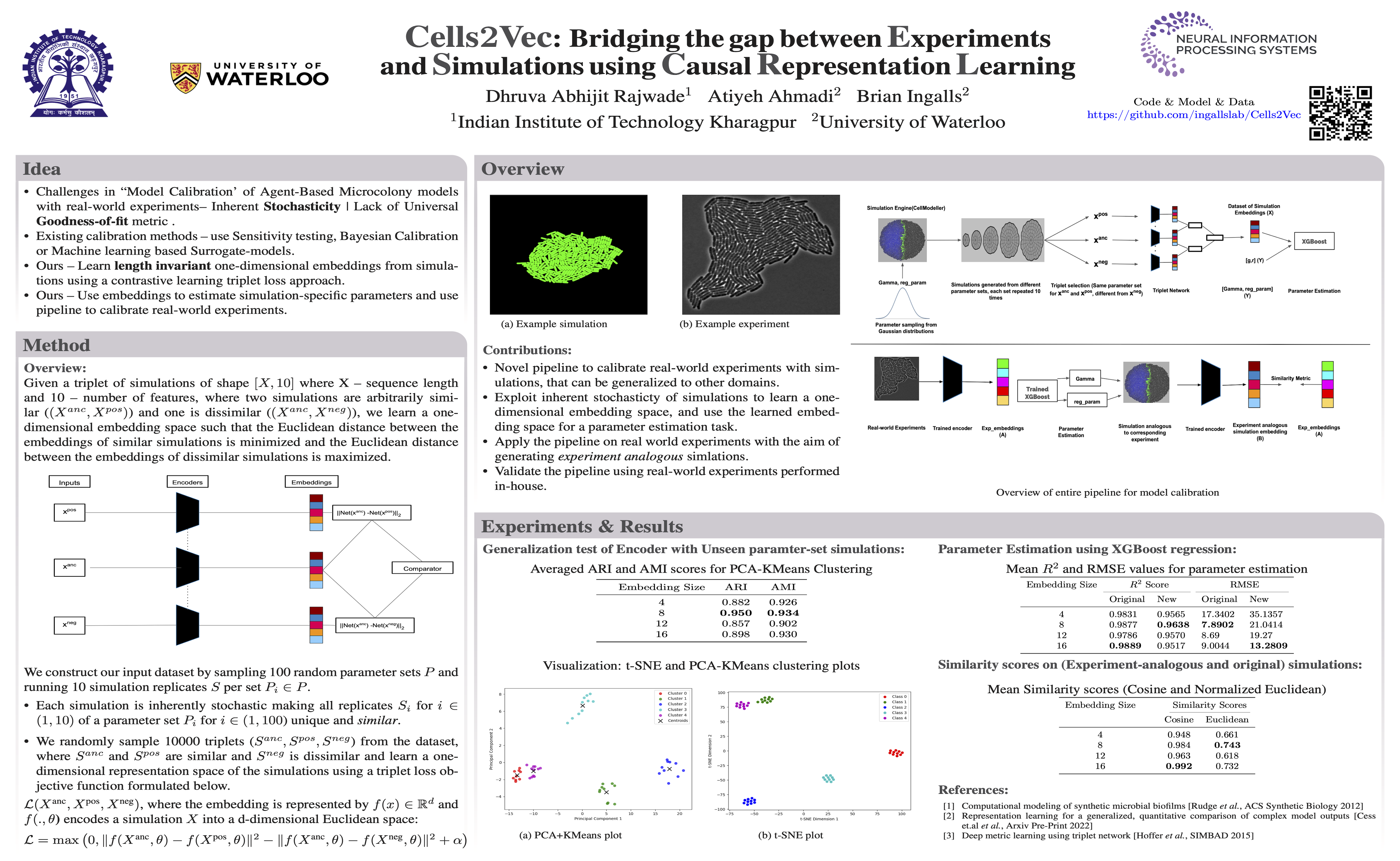
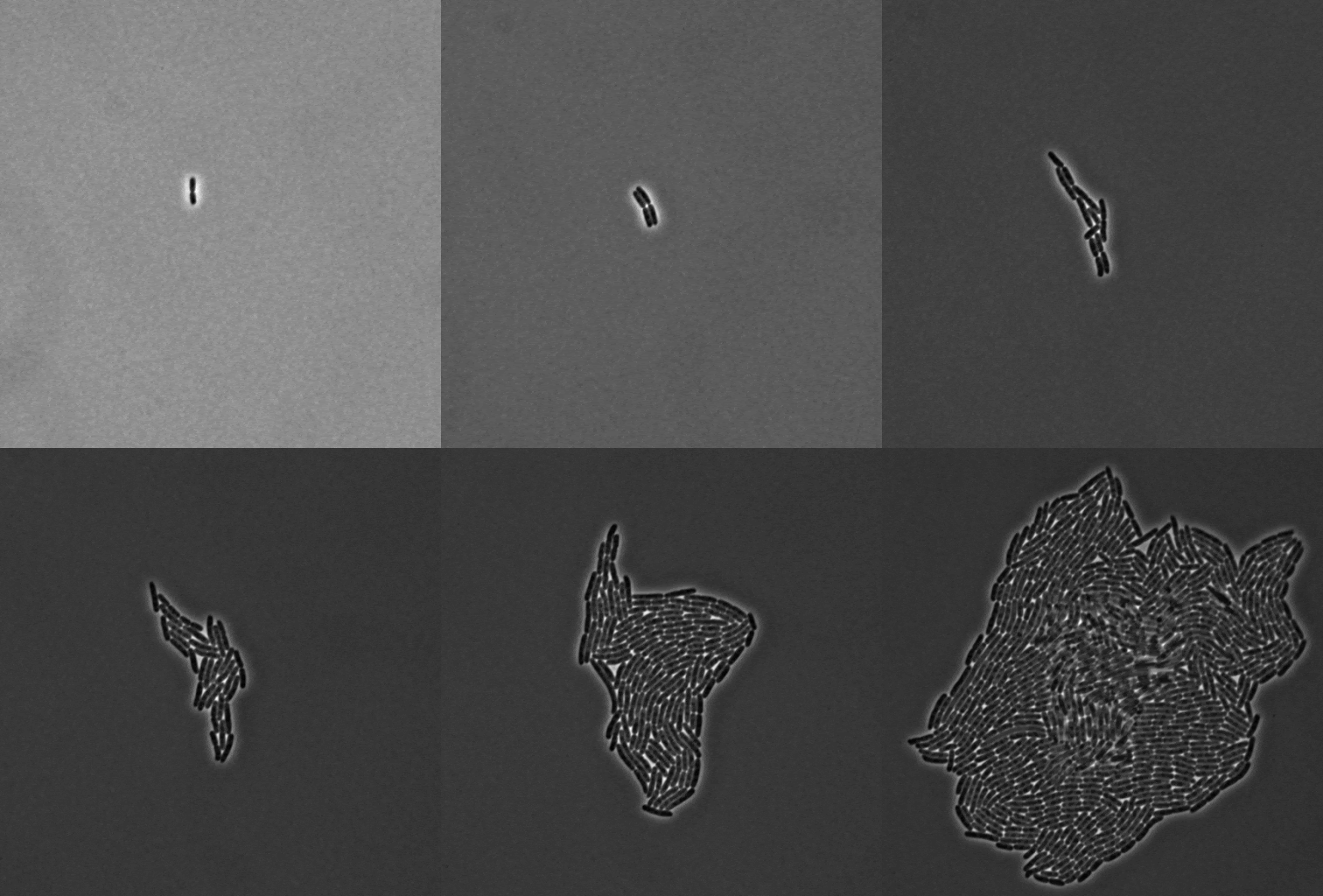
Cells2Vec: Bridging the gap between experiments and
simulations using causal representation learning
Dhruva Abhijit Rajwade,
Atiyeh Ahmadi,
Brian Ingalls
NeurIPS 2023 Causal Representation Learning
Workshop, 2023
Paper /
Poster
/
Code
/
Slides
/
Talk
Learning meaningful representations of multi-cell
timeseries (Cellmodeller) simulations using causal representation learning.
Current work includes extending this to real-world data,
and for proxy-simulation generation for biological
experiments.
|
|
Prediction of Idiopathic Recurrent Spontaneous
Miscarriage using Machine Learning
[Best Paper Award]
Dadoma Sherpa, Dhruva Abhijit Rajwade,
Imon Mitra, Dhruba Dhar, Sunita Sharma, Pratip
Chakraborty,
Koel Chaudhury
IEEE International Conference on Computer, Electrical &
Communication Engineering, 2023
Paper
/
Code
Using Raman Spectroscopy and Machine Learning for
prediction of Idiopathic Recurrent Spontaneous
Miscarriage (IRSM). Improved this work using ATR-FTIR
Spectroscopy in a follow-up study, and currently working
on a multi-omics approach to the same problem.
|
|
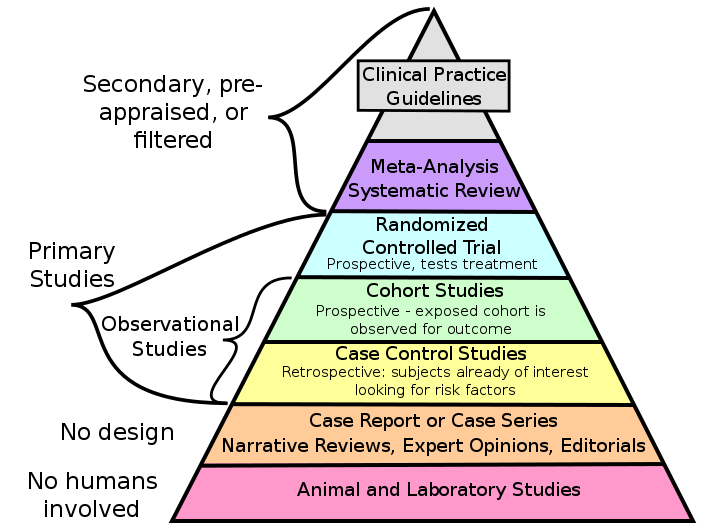
Risk factors associated with mortality in
hypersensitivity pneumonitis: a meta-analysis
Sanjukta Dasgupta, Anandita Bhattacharya,
Dhruva Abhijit Rajwade, Sushmita Roy
Chowdhury,
Koel Chaudhury
Expert Review of Respiratory Medicine (Journal),
2022
Paper
/
Code
Using different statistical tests and empirical analyses
to identify risk factors associated with mortality in
Hypersensitivity pneumonitis, a rare lung disease.
Checking for Publication bias and heterogeneity in the
data, and using meta-analysis to combine results from
different studies.
|
|
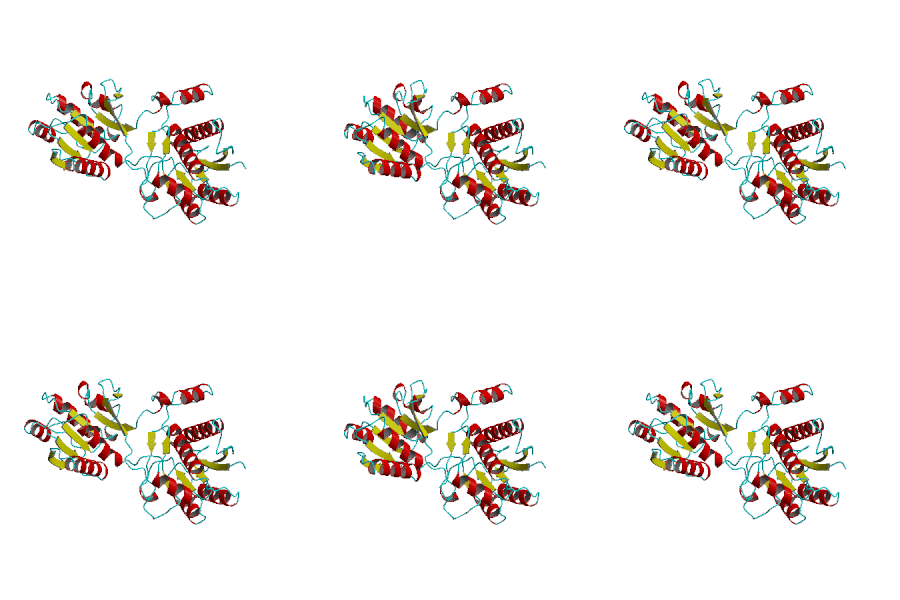
Discrete Diffusion For Tunable DNA-binding Protein
Design
[Slides]
Can you design a protein to bind a stretch of DNA of
your choosing? My Master's thesis argued that you can
get surprisingly far by learning the distribution of
DNA-binding protein sequences with a discrete diffusion
model, and then steering it at sampling time with
Seq2Contact
as the guidance signal. The nice thing about that
framing is how many design problems it absorbs:
inpainting a DNA-binding domain between existing
functional domains, CRISPR-Cas design, or running the
whole thing backwards to ask which DNA a given protein
would prefer. Some of the designs went on to express in
the lab. In collaboration with Prof.
Riddhiman Dhar
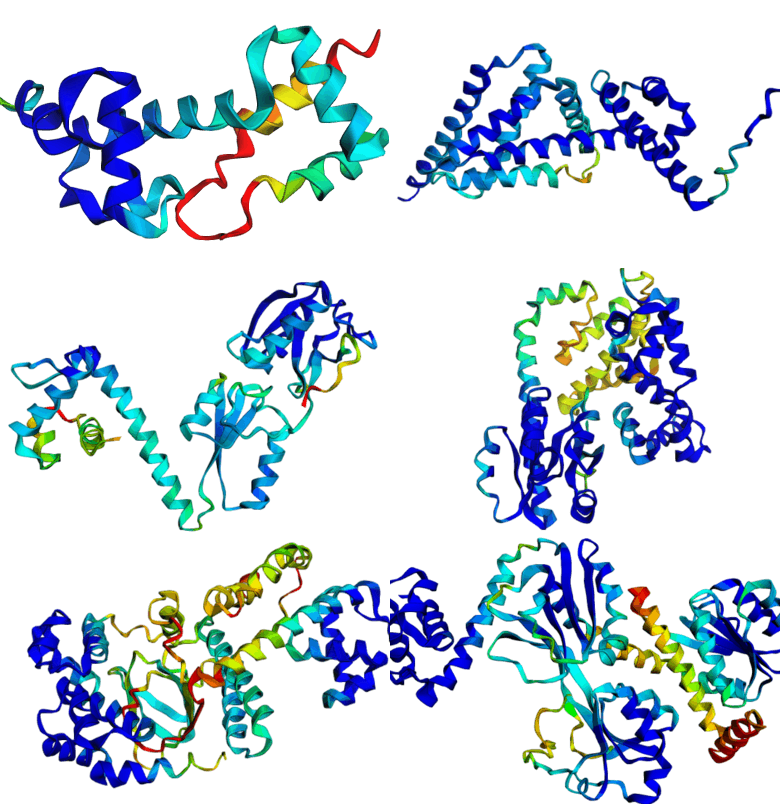
at IIT Kharagpur; the image shows ESMFold structures of
sampled (not cherry-picked) sequences, coloured by
confidence.
|
|
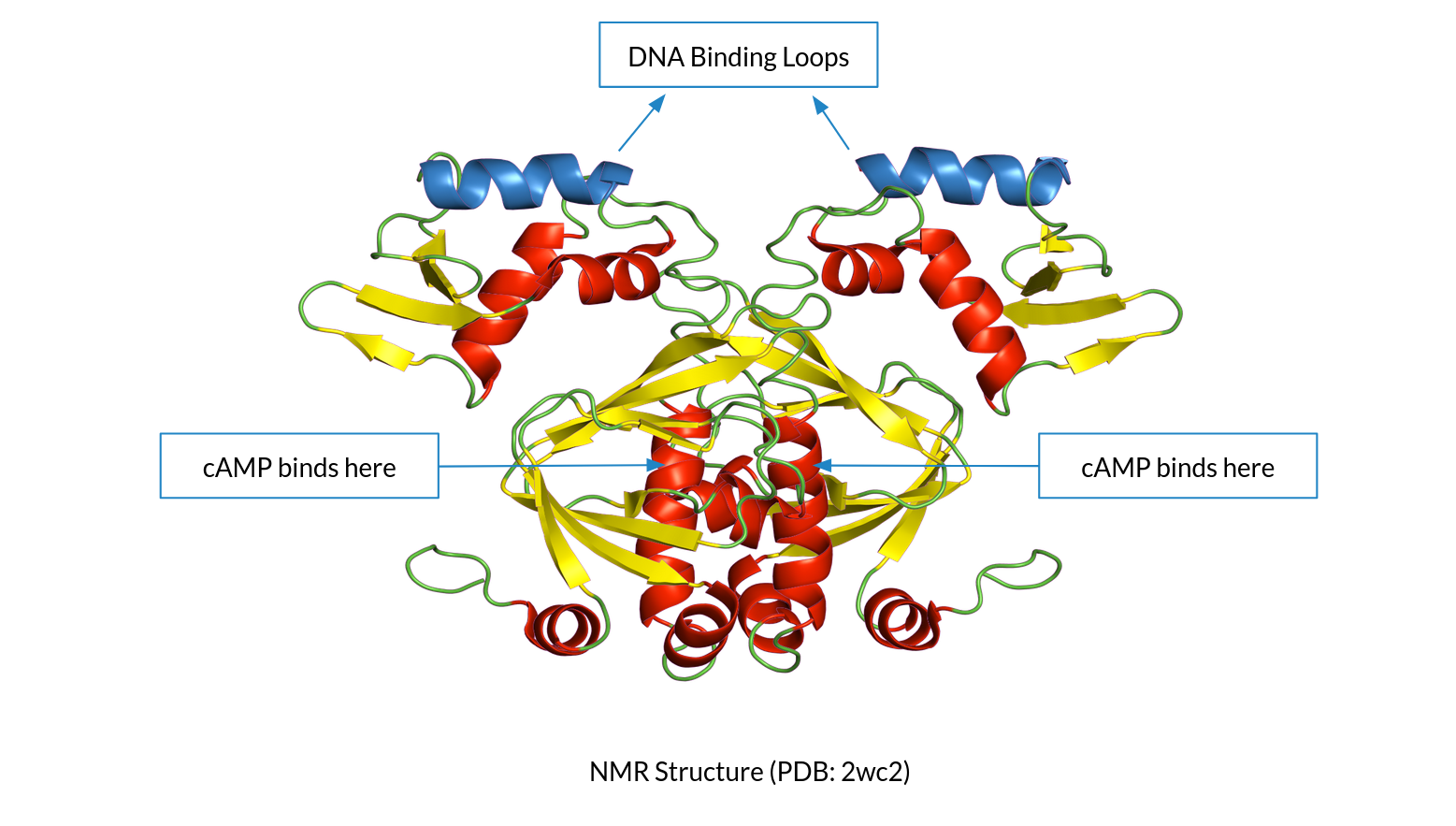
Finding Allosteric Networks in the CAP-cAMP system using
Deep Learning and Molecular Dynamics
[Slides]
When cAMP binds CAP, the protein rearranges somewhere
else entirely, and transcription follows. The question
here was whether that line of communication can be read
off the dynamics rather than guessed at from structure:
simulate the complex, then look for residues that move
together. Three candidate allosteric networks fell out,
via
AlloReverse. The harder version — learning the dynamics
directly, so that allosteric discovery generalises past
one system — is still open. In collaboration with
Prof.
Soumya De
at IIT Kharagpur.
|
|
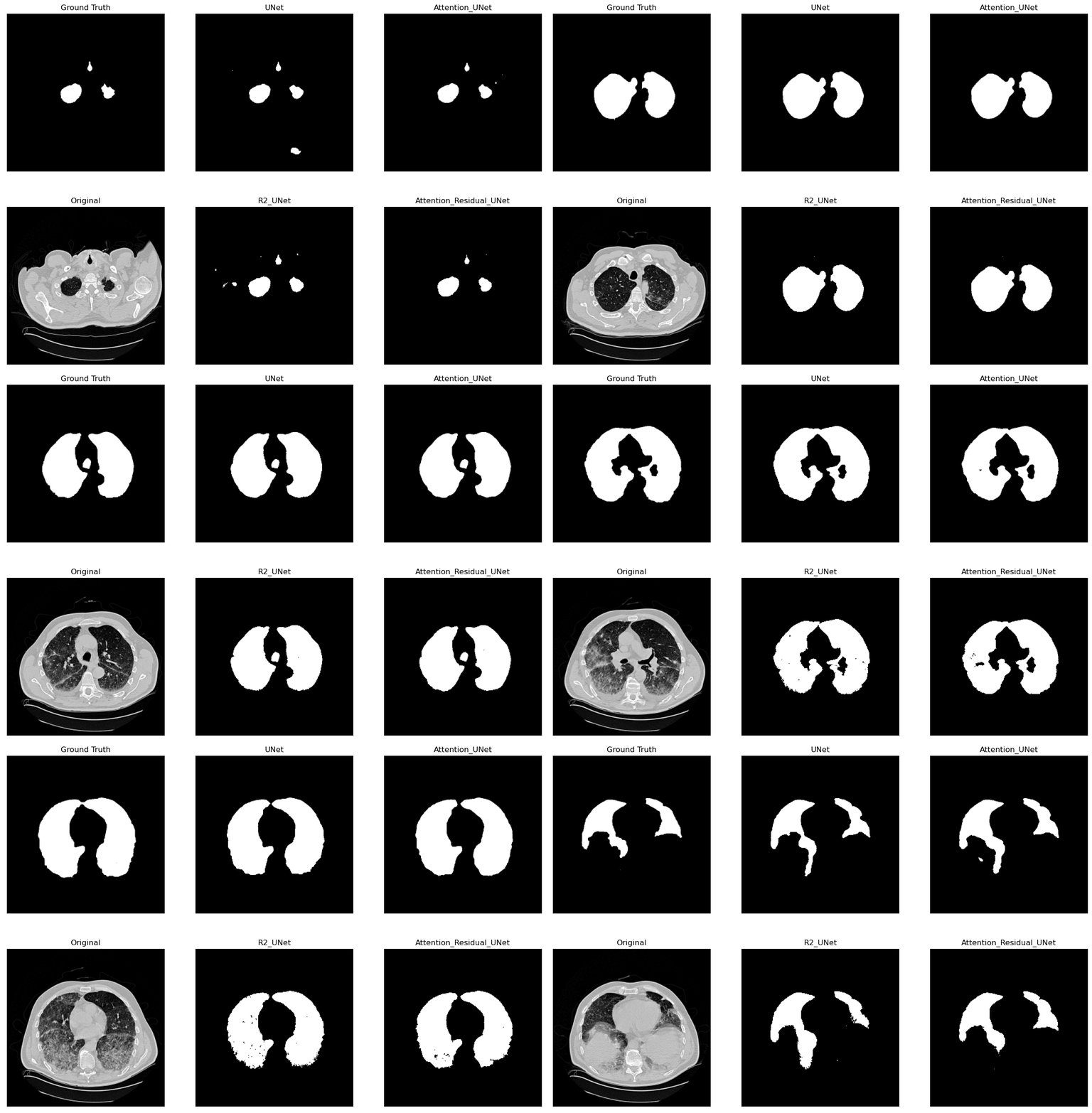
Lung Segmentation and Disease Classification using Deep
Learning
[Code]
Worked on using the
Geneva HRCT dataset
to segment lungs and classify diseases using Deep
Learning. The final model uses a U-Net architecture for
segmentation and a CNN for classification. The model was
trained on a subset of the dataset and tested on CT scan
images obtained externally through collaborations with
Hospitals.
|
|
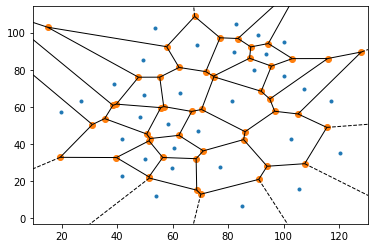
Functional Network Analysis of Calcium ion pathways in
beta-islets of the Pancreas
[Code]
Worked on using Calcium ion imaging time-series data to
extract functional networks in beta-islets of the
pancreas. Used Voronoi Delaunay triangulation (see
image) to extract the network, and used graph theory to
analyze the network. Code is incomplete and will be
updated soon.
|
This website's template is taken from
Jon Barron. Do not scrape the HTML from this
page itself, as it includes analytics tags that you do
not want on your own website — use the github code
instead. Also, consider using
Leonid Keselman's
Jekyll fork
of this page.
|
|